From saving pandas to forest conservation: Meet the 5 female laureates of the 2026 Rolex Awards
Verification Status: Pending
Overall Assessment: Pending Verification
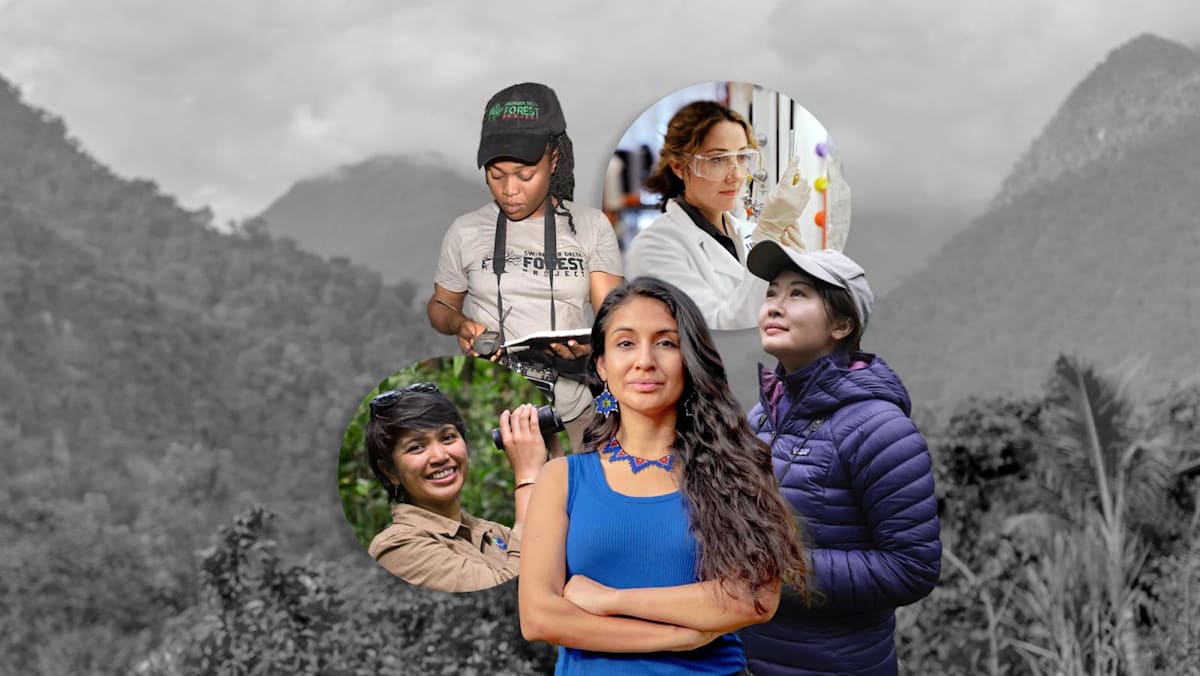
From saving pandas to forest conservation: Meet the 5 female laureates of the 2026 Rolex Awards As the Rolex Awards marks its 50th anniversary, the Swiss watchmaker has unveiled an all-female line-up of Laureates whose ambitious projects are driving positive change in environmental protection, science and humanitarian work. Rolex may be best known for its iconic timepieces such as the Submariner, Daytona and Oyster Perpetual, but beyond watchmaking, the Swiss brand has also championed environmental protection and humanitarian causes through the Rolex Awards. Part of the brand’s Perpetual Planet Initiative, the Rolex Awards – originally named the Rolex Awards for Enterprise – celebrates its 50th anniversary in 2026. The programme was first established in 1976 to mark the 50th anniversary of the Oyster, the world’s first waterproof wristwatch. The Rolex Awards recognises individuals, known as Laureates, whose pioneering projects have the potential to create significant positive impact for both humanity and the environment. This year also marks a shift in the programme’s format – it will now run annually instead of biennially, expanding the brand’s ongoing support for work in environmental conservation, science, health and technology. Candidates are first identified by Rolex with the help of its global network of affiliates, partners and advisers, before being invited to apply. Applications are then evaluated by Rolex alongside experts from relevant fields. Since its inception, the Rolex Awards has recognised 165 Laureates representing 52 nationalities, whose projects have been carried out across more than 67 countries. Previous recipients have included archaeologists, architects, educators, engineers, entrepreneurs, explorers, medical doctors, geologists, physicists and more. Each Laureate receives funding to implement their project, along with international media support. This year’s cohort features an all-women line-up, hailing from Indonesia, China, Nigeria, Peru and the US. Their work spans fields ranging from forest conservation and biodiversity protection to pandemic prevention and community-led sustainability. DEFENDING A FOREST IN SUMATRA: FARWIZA FARHAN (INDONESIA) The Leuser Ecosystem of Sumatra is the last place on earth where elephants, tigers, orangutans and rhinoceros still coexist in the wild. Forest conservationist Farwiza Farhan has mobilised local communities and led numerous campaigns against its destruction. The Rolex Award will help continue her work enabling women and grassroots communities to monitor and defend their unique ecosystem. PROTECTING WILD PANDAS: BINBIN LI (CHINA) Fewer than 2,000 giant pandas remain in the wild. Environmental scientist Binbin Li is working with local communities in central China to create a sustainable approach to livestock grazing – protecting the panda and its habitat whilst supporting local economies. The Rolex Award will help her implement and scale up solutions across several mountain ranges throughout China. PREVENTING EPIDEMICS: PARDIS SABETI (US) Pardis Sabeti is a medical geneticist who has spent decades at the frontline of fighting viral outbreaks and potential pandemics in West Africa. The Rolex Award will allow her to develop and test a new, portable diagnostic tool in remote communities in Sierra Leone – with the potential to catch outbreaks before they spread. MOBILISING COMMUNITY-LED CONSERVATION: RACHEL IKEMEH (NIGERIA) Credited with saving the Niger Delta red colobus monkey from the brink of extinction, Rachel Ikemeh has protected over 5,839 ha of forest and at least 13 threatened species, while improving the livelihoods of more than 2,500 people. The Rolex Award will support the building of a new training hub and mobile education programme in the Delta. SAVING BEES TO PROTECT THE AMAZON: ROSA VASQUEZ ESPINOZA (PERU) Chemical biologist Rosa Vasquez Espinoza was the first to scientifically link Amazon deforestation with the decline of stingless bees – a critical pollinator of endemic plant species. Her research contributed to a landmark legal case in Peru recognising the legal rights of stingless bees. The Rolex Award will allow her to expand an indigenous-led corridor of protected bee habitats in the Peruvian Amazon. Find out more about the Rolex Awards here
Comments (0)
Sign in to join the discussion
No comments yet. Be the first to share your thoughts!